
Blogs
How to Map Your Opponent's Strategy Before They Step into the Courtroom
👤 Vikram Singh
May 31, 2026
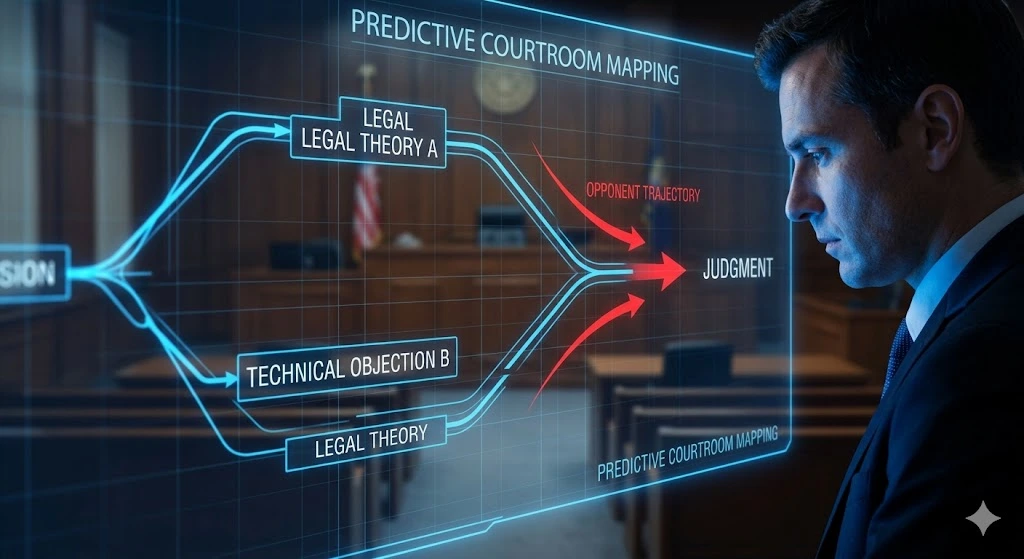
How to Map Your Opponent's Strategy Before They Step into the Courtroom
In litigation, the courtroom battle starts when the judge takes the bench. But in reality, case outcomes are shaped long before the first argument starts. The lawyers who perform well regularly not only react to developments in court, but anticipate them.
One of the major problems in modern legal practices is that it has the ability to predict what opponents are going to argue, anticipating them that they rely on and where they attempt to exploit weaknesses in your case. It is suggested to map your opponent's strategy before arriving in the courtroom and get a leading edge to win the case. Read this blog to get the step-by-step guide to use AI for mapping opponent strategy, and get help in criminal litigation, civil disputes, family matters, bail proceedings, or other cases.
Overview of Predictive Courtroom Mapping
Here is the overview of the focus points that you should look at while mapping the opponent's strategy.
| Analytical Focus | Intelligence Source | Strategic Advantage |
|---|---|---|
| Pleadings & History | Court dockets, past motions | Predicts legal theories |
| Behavioral Quirks | Trial transcripts, peer interviews | Reveals cross-examination style and trial tempo |
| Hidden Ecosystems | OSINT, corporate registries | Surfaces leverage points and entity contradictions |
| Vulnerability Check | "Red Team" case simulation | Identify self-inflicted blind spots and proof gaps |
Step-by-Step Guide to Map Opponent Strategy
Here is the proactive strategy you should follow to map the opponent's strategy.
Understand the Procedural Stage of the Matter
Opponent strategy shifts significantly based on the procedural stage of the case. Prosecution focuses on custodial interrogation, public interest issues, or the seriousness of the allegations. So in a trial, the focus of lawyers may turn to witness credibility, documentary inconsistencies, or procedural errors.
Appellate litigation deals with errors in interpreting evidence, procedural irregularities, or constitutional issues. So don't start predicting anything, first you have to identify:

- Is the matter at the FIR stage?
- Is it pre-trial?
- Is it during evidence?
- Is it an appeal or a revision?
- Is interim relief being sought?
It helps you to find the legal strategies that your opponent is likely to use.
Analyze the Court and Jurisdiction
Different courts approach similar matters in different ways. The strategy that works in a District Court may not work in SC or HC. Experienced litigators study judicial tendencies closely. Certain benches may prioritize procedural compliance, while others may focus more on constitutional protections or equitable relief. So to accurately map opponent strategy, you should first understand the court and jurisdiction. It helps you to predict:
- The type of precedents opposing counsel may use
- Technical objections, if possible
- How aggressively interim relief may be opposed
- The chances of strict procedural scrutiny
Using legal AI tools is recommended to prepare for litigation. Liznr Legal helps you to prepare your case brief as per the court where the matter is heard and keeps your research courtroom-specific.
Identify the Opponent's Strongest Argument
Avoid making weaker arguments than opponents. To make strong arguments, you should ask yourself: "What is the most damaging argument the other side can make against my case?" Once you identify that, prepare for it first.
For example:
- In bail matters, the prosecution may argue flight risk or witness tampering.
- In cheque bounce matters, the defense may challenge the existence of a legally enforceable debt.
- In family disputes, the opposing side may allege financial concealment.
- In property disputes, title validity and possession timelines often become central.
It helps you to predict the strongest arguments if you work on your weaknesses, and may win the case in your favor.
Study Precedents the Opposition Will Likely Use
Finding judgments that support your case is important while mapping the opponent's strategy. You should identify the cases that are likely to be cited against you. It allows you to prepare counterarguments, find factual differences, research opposing precedents, and develop rebuttal structures earlier.

But note that this process takes a number of hours in manual legal research. So you can use the AI tools to figure out which precedents the opposing counsel might rely on. Modern AI tools like Liznr Legal make it easier. Liznr Legal helps you to evaluate jurisdiction, litigation stage, and case facts to predict opposing citations and counterarguments and keep you prepared proactively rather than reactively.
Build a Timeline of Events
Some lawyers won or lost cases based on chronology. Here, the role of chronological mapping comes. It helps you to cover contradictions in statements, delays in filing, missing procedural steps, weak documentary sequences, and suspicious gaps in conduct.
Your opponent will likely use timelines to challenge credibility. So, you must create a detailed list of dates before they do. Chronological mapping also enhances courtroom presentation, making it easier for judges to follow the factual narrative.
Examine Your Own Case for Gaps
Next, it is suggested that strong advocates assess their own cases during preparation. It can be uncomfortable, but it is necessary. You should ask questions itself, like:
- Which facts are weak?
- Which documents are missing?
- Are there contradictory witness statements?
- Are procedural requirements incomplete?
- Is there any unexplained delay?
- Are there jurisdictional issues?
Usually, the opposition actively searches for these gaps. If you identify it early, you can prepare clarifications, support evidence, or alternative arguments before the hearing starts. Some legal online AI tools feature dedicated "case gap" analysis modules that automatically identify potential weaknesses based on case inputs and legal provisions.
Predict the Litigation Psychology
Litigation strategy involves more than legal matters, but also psychology. Some opposing counsels apply aggressive courtroom pressure. Others use delay tactics, technical objections, or excessive filings to exhaust their opponents. You must understand the style of litigation to prepare effectively. Ask the following things to predict litigation psychology:
- Will they seek repeated adjournments?
- Are they likely to challenge maintainability first?
- Will they focus on technical issues?
- Are they expected to push emotional arguments?
- Will they attempt media pressure or urgency tactics?
By doing strategic preparation and anticipating behavior patterns, you can create an effective opponent mapping plan and increase the chances of your win.
Prepare Counterarguments Before the Hearing
Another strategy for opponent mapping is to prepare counterarguments before the hearing. It is suggested that lawyers prepare a structured counter in time for every likely issue. It includes distinguishing precedents, alternative interpretations of facts, constitutional protections, procedural safeguards, evidentiary challenges, questions about maintainability, and jurisdictional objections.

When counters are ready earlier, hearings become more controlled and focused.
This is one reason many legal professionals are now using AI-assisted workflow systems. By cutting research and drafting time from hours to minutes, lawyers can concentrate more on courtroom strategy and refining arguments.
Conclusion
Winning a case in court is about presenting strong arguments and anticipating the opposing side before the hearing starts. It is suggested that lawyers prepare effectively to gain a leading advantage in litigation.
By analyzing procedural stages, likely precedents, counterarguments, and weaknesses early, legal professionals can respond with more confidence and precision. Using AI legal research tools like Liznr Legal reduces research time, simplifies this process, and improves preparation quality. It allows advocates to focus more on courtroom strategy rather than repetitive manual tasks.
FAQs
- How can lawyers predict an opponent's courtroom strategy?
Lawyers must check the case facts, previous judgments, procedural stages, likely legal challenges, and litigation patterns to predict a strong opponent's strategy. - Do AI legal tools replace lawyers in litigation?
No, AI legal tools do not replace lawyers during litigation. It only helps you with drafting a case, research, and case analysis. It also helps you to create final legal judgment, courtroom strategy, advocacy, and decision-making, but you should rely on experienced legal professionals also. - What makes Liznr Legal different from general AI tools?
Liznr Legal is different from general AI tools because it is specially designed for Indian legal practice. It works by using the verified court judgments and data from the IPC, CrPC, and BNS, and gives you accurate and courtroom-relevant legal insights.
Share:
Table of Contents
No headings found in this post
Unlock smarter meetings with AI. Explore Liznr for product updates, success stories & collaboration insights.

Useful links
liznr.ai Blog
Check out the Liznr blog for expert tips, inspiring customer stories, and smart strategies on productivity, remote work, and making the most of meetings.
Subscribe to Our Newsletter