
Blogs
How AI Supports Criminal Defense: Trial Prep, Discovery Strategy
👤 David Charles
May 31, 2026

How AI Supports Criminal Defense: Trial Prep, Discovery Strategy
Criminal Defense work is not only demanding, but it is relentless. Tight timelines, high caseloads, and digital evidence make it tough for skilled attorneys to keep up. AI tools emerge as great support for Criminal Defense and extend bandwidth when it matters most.
Factual investigation, legal research, witness interviews, document review, case strategy, and evidence management are all in the to do list during a criminal defense case. Because criminal cases vary in nature, lawyers must have diverse legal expertise to handle challenges. Using AI tools like Liznr Legal reduces your workload, manages information efficiently, and keeps you focused on case-critical work.
The Criminal Defense Challenges AI Solves
Criminal cases are defined by stakes, speed, and volume. Discovery arrives in various quantities, bodycam footage, police reports, forensic analysis, phone records, financial documents, and witness statements, often with minimal time to review before deadlines.
The attorney needs to make decisions about which parts of the discovery to read carefully and which parts to skim. Those rushed decisions cost clients their freedom. Not because lawyers are careless, but because of high volume.
How AI Streamlines Trial Preparation
In criminal defense, trial preparation involves gathering evidence, structuring the defense narrative, preparing exhibit lists, drafting opening and closing arguments, and creating witness outlines. All tasks doing the same time puts lawyers under pressure of a fixed trial date.
So the AI legal research tool, like Liznr Legal, helps you in trial prep. It connects the entire case record, including the discovery analysis, the chronology, the research, and the suppression motion results, into a single trial preparation framework. The case you built at intake is the same case you take to the courtroom. Here is how AI streamlines your legal preparation.

- Cross-Examination Preparation
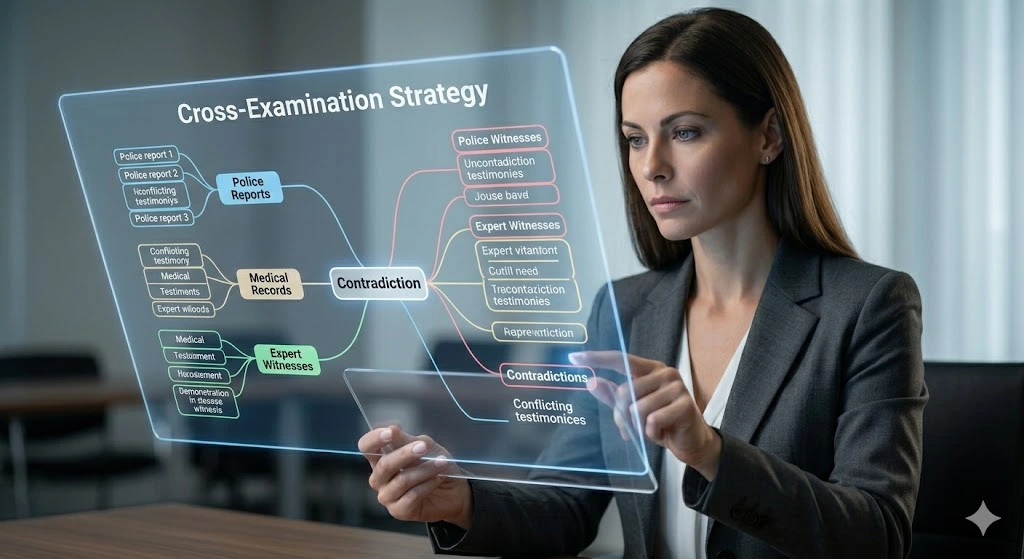
AI legal tools analyze the witness statements, depositions, police reports, and medical records and create structured outlines for cross-examination. It helps the attorneys to find timeline inconsistencies, contradictions, and question strategies linked to the evidence more quickly. - Motion and Brief Drafting
It also helps to scan the court databases to find relevant precedents, suggest citations, and aid lawyers in structuring motions, legal briefs, procedural applications, and evidentiary objections more efficiently. - Voir Dire and Persona Testing
An AI legal research tool like Liznr Legal simulates several jury personalities and demographic viewpoints, and makes it easier for lawyers to test opening statements, evaluate emotional responses, and spot weaknesses in courtroom presentation strategies before trial. - Timeline and Event Reconstruction
It gathers witness statements, evidence, call records, and procedural documents into chronological timelines and helps you to see the case progression clearly. It also helps you to identify suspicious delays or inconsistencies quickly. - Witness Credibility Analysis
Another way how AI legal tools help in trial preparation is by analyzing witness credibility. It compares witness statements across multiple documents, changes narratives, finds contradictions, missing details, and suspicious similarities, and improves your credibility during trial arguments. - Legal Risk Assessment
AI tools also evaluate procedural gaps, evidentiary weaknesses, and unfavorable precedents. It helps criminal defense teams to identify litigation risks early and prepare stronger counterarguments in the courtroom.
How AI Legal Tools Are Revolutionizing Discovery Strategy
Lawyers face problems in managing criminal discovery manually. Modern cases usually involve thousands of pages of documents, call records, forensic reports, videos, and witness statements. Reviewing complete information line-by-line increases the chance of missing critical details or lead inconsistencies. So here, the AI legal tools help.
It helps defense teams to quickly organize, analyze, and cross-reference evidence and maintain accuracy. It does not replace legal judgments completely, but works as a force multiplier that improves efficiency during trial preparation and discovery review.
- Evidence Synthesis
AI tools have the capability to extract and arrange crucial details from large datasets, including timelines and dates, timestamps, witness statements, police reports, geolocation information, and communication records.
The technology cross-references these details to find hidden inconsistencies or contradictions that might go unnoticed during a manual review. For example, AI may detect contradictions between police reports and call records, missing procedural steps, witness timelines that do not match CCTV footage, and location mismatches in statements. In this way, it reduces inconsistencies during cross-examination or defense strategy planning. - Multimedia and Audio Transcription
Usually, criminal defense cases involve hours of CCTV recordings, jail calls, interrogation footage, bodycam videos, and voice recordings.
So AI tools help you review this material quickly and save time. It also converts video and audio recordings into searchable, timestamped text. Platforms like Liznr Legal allow you to quickly search conversations, identify important statements, and find critical moments without having to listen to lengthy recordings repeatedly. It speeds up evidence review and boosts preparation efficiency. - Sentiment Analysis
AI systems also help you in analyzing the emotional tone of communications such as emails, text messages, chat records, and voice transcripts.
This process, known as sentiment analysis, helps identify emotional shifts, pressure, fear, aggression, or distress in conversations. For criminal defense lawyers, this can help establish signs of duress, context behind statements, emotional instability, alternative motives, and relationship dynamics between parties.
These insights may support broader defense strategies or strengthen arguments regarding intent, consent, or credibility during trial proceedings.
Benefits of AI Legal Tools for Defendants
AI tools not only help in preparing for a criminal defense case but also help lawyers to handle complex legal work efficiently. From organizing discovery materials to reviewing evidence to predict prosecution arguments and drafting motions, AI reduces repetitive manual tasks.
It allows lawyers to focus on courtroom strategy, client representation, and trial preparation. When used responsibly, AI improves legal workflows while helping defendants get faster, more organized, and strategically prepared legal representation during criminal cases.
- Efficiency
AI tools help you in evidence review, document organization, and legal research, and help you to prepare cases quickly. It reduces the delays caused by repetitive work and manual analysis. - Cost Savings
By automating the research, drafting, and evidence management, AI reduces the billable hours spent on repetitive tasks. It helps defendants save on overall litigation costs without sacrificing case preparation quality. - Stronger Defense
AI tools help you to identify procedural gaps, weak evidence, contradictions, and missing details that can strengthen defense arguments and improve courtroom strategy during hearings, negotiations, or trial proceedings. - Faster Bail Preparation
AI tools help you in preparing anticipatory bail and regular bail applications quickly. This allows defendants to respond more swiftly during urgent criminal proceedings and hearings. - Better Evidence Organization
Categorizing documents, witness statements, timelines, and digital records systematically makes it easier for defendants to find critical information during trial preparation and courtroom arguments. - Improved Case Strategy
It can easily predict the prosecution's arguments and find legal weaknesses early. In this way, it helps lawyers to create proactive litigation strategies rather than reacting under pressure during courtroom proceedings.
Conclusion
AI has become a crucial support system in modern criminal defense cases and helps lawyers to prepare cases effectively. It also helps to organize evidence and identify the strategic opportunities early. From discovery review and motion drafting to predicting prosecution arguments, AI-assisted legal tools enhance preparation quality without replacing professional legal judgment.
Platforms like Liznr Legal show how technology can streamline litigation workflows while allowing advocates to focus more on courtroom strategy, client representation, and strengthening defense cases under tight deadlines.
FAQs
- Can AI help criminal defense lawyers during trial preparation?
Yes, AI helps criminal defense lawyers during trial preparation by organizing evidence, reviewing discovery materials, finding inconsistencies, drafting legal motions, and preparing stronger courtroom strategies efficiently. It saves the time of lawyers on traditional manual workflows. - Does AI replace criminal defense attorneys?
No, it does not replace attorneys completely. It supports them by automating repetitive legal tasks, but courtroom advocacy, cross-examination, negotiation, ethical judgment, and final legal strategy still rely entirely on experienced lawyers. - How does AI improve discovery strategy in criminal cases?
AI improves the discovery strategy in criminal cases by analyzing witness statements, organizing documents, identifying contradictions, transcribing multimedia evidence, and identifying procedural gaps quickly. It allows you to prepare more effective litigation strategies.
Share:
Table of Contents
No headings found in this post
Unlock smarter meetings with AI. Explore Liznr for product updates, success stories & collaboration insights.

Useful links
liznr.ai Blog
Check out the Liznr blog for expert tips, inspiring customer stories, and smart strategies on productivity, remote work, and making the most of meetings.
Subscribe to Our Newsletter